Showing posts with label bread. Show all posts

Saturday, November 13, 2010

Fall | Pear Bread


Photobucket


I really dislike most pears. In fact, the only kind I eat raw with true enjoyment are red D'anjou pears.  They're so juicy, their flesh so creamy and sweet when you bite into them at their peak, it's quite unnecessary to cook them.

Sadly, I don't know of many D'anjou growers close by, so I settled for buying four (4!) pounds of nondescript, local Ohioan pears on my last local-food shopping spree (they were probably Bartlett pears- shudder). At $1.00, they were a steal and I was supporting the Borman Farm, so I felt doubly good about myself. 'Tis almost the season, right?

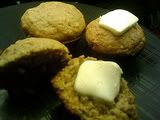
There was no way I was gnawing through four pounds of pears, so I promptly found a recipe for cinnamon pear bread and fed it to everyone who would try it. Honestly, it was a success. The bread was moist, the cinnamon was not overpowering, and the delicate pear flavor came through.  This is a great recipe for those of you who buy pears with good intentions, but never end up eating them (and, if I know my friends and family, they have pears moldering away in a pretty fruit basket as I type).  So, this one's for you!

Warning: grating the pears is a bit of an undertaking. Prepare to get messy and wet. I used all the juices that grating the pears brought out.  You should, too.


  • 3 cups all-purpose flour
  • 1 teaspoon baking soda
  • 1/4 teaspoon baking powder
  • 1 teaspoon salt
  • 1 tablespoon ground cinnamon
  • 3/4 cup unsalted butter, softened
  • 3 eggs, lightly beaten
  • 2 cups brown sugar (my go-to: I just love the flavor)
  • 2 grated cups of pears- prep this item last
  • 2 teaspoons vanilla extract

    1. Heat your oven to 350°F. Grease and flour either a 10-inch tube pan, or two 9-by-5-inch loaf pans. I used one 9-by-5-inch loaf pan and a muffin pan. I removed the muffins from the oven earlier than the larger pan.

    2. Combine the flour, baking soda, baking powder, salt, and cinnamon in a large mixing bowl. Mix well, but you don't need to sift (don't you love making bread?).

    3. Peel and core pears, then grate them. You need to set aside 2 grated cups, again, including the sweet juice.

    4. In a medium bowl, combine the butter or oil, eggs, sugar, grated pear, and vanilla, and stir to mix everything well. Scrape the pear mixture into the flour mixture and stir just until the flour disappears and the batter is evenly moistened
    5. Scrape the batter into the prepared pans and bake at 350°F for 50 to 60 minutes, or until the bread is golden-brown, firm on top, and a wooden skewer inserted in the center comes out clean. Again, I took my muffins out earlier. 
    6. Let the bread cool on a towel or a wire rack, then turn over and serve. You could sprinkle it with powdered sugar, but it doesn't need it. Butter is better!

I'll admit that, halfway through grating ten small pears, I was growing suspicious that this was a stupid way to spend a Thursday night. Then I tried a warm piece of pear bread with butter, and I thought such nonsense no more. And you will probably be using larger pears, in which case you'll only have to grate 3 to 4.

Bottom line: get your grandmother or your significant other to make this for you if you have no patience, but get it made. It's that good. (Just don't leave the bread out overnight, and it'll stay moist for days!).

Tuesday, October 5, 2010

Eat Local: Rosemary Potato Wheat Bread


I walked into the Oberlin market this afternoon to buy my daily serving of "local" fruit, since I'm taking the Eat Local Challenge seriously. I found the little pears and apples easily, but I can't just run in and out of a store efficiently. I like to meander and rifle through the product, making myself want more things than I need. This time it wasn't just product that kept me looking; no, the most gorgeous, earthy, pizza-like, bread-y aroma filled the room. I stepped into the little bakery next to the cash register and was pointed toward lovely, freshly-baked loaves of rosemary potato bread.

It was still warm and, thankfully, the flavor matched the promising aroma. My roommate and I walked around Oberlin finishing our errands while eating large chunks of the loaf. Half of it was gone twenty minutes after buying it. Do you see those weird muffins under the rich loaves? Those are garam masala muffins. The bread was so good that I'm willing to try the garam masala muffins next time I'm there.

Next up: a review of old school milk. You know, the kind that was taken from a cow just down the road and presented in a glass jar. Wish me luck!

Saturday, May 29, 2010

shameless plug | needs re-write


Delicious black bread via Yogurtland.


I've been reading these Russian posts on Sunshine Supercars (go visit, I guest blog there!) for over a year or so - stories filled with mad Russians racing their super-fast cars at evil speeds on public roads, seemingly without a care in the world.

They fascinate me, these Russians. I want to know more about them. How do they think? Where do they live? What - most importantly - do they eat?

You all should know I'm a bit of a foodie, so it seems a natural enough question to me. You should also know I have a real problem with Ohio winters, so how do these Russians get through theirs? By loading up on that superb Russian staple: bread!

I was as surprised as you probably are to learn that bread is one food item a Russian table is rarely without.

Now, we all know that no decent human can deny the satisfaction of a freshly-baked loaf of crusty bread, but the Russians elevate its importance to an intense level of seriousness. The Russian intellectuals have asserted that "the quality of bread is the quality of our life".

The importance the Russians have placed on their bread isn't recent, either. During the Cold War, the baking of bread was industrialized, and the Soviet government fixed its price, making a bland, homogenized, and stereotypically communistic sort of bread accessible to all.

In the home, more traditional wives and grandmothers prided themselves on their mad bredmakin' skillz. How did they organize culinary throw-downs in Russia? By pairing off a dense and chewy Borodinsky against a Chorni Chleb - a particular black bread with more than twenty ingredients, including rye flour, chocolate, shallots, coriander, and caraway seeds ... it sounds divine.

All this emphasis on bread and baking follows the Russian proverb, "bread is at the head of everything," and it seems to do a body good


And, finally, because I couldn't resist ...


IN SOVIET RUSSIA BOBBY FLAYS YOU


... ah, Yakov. You taught us well.